home battery storage in Coventry
Serving Coventry and the wider West Midlands area, including Solihull, Rugby, Nuneaton.
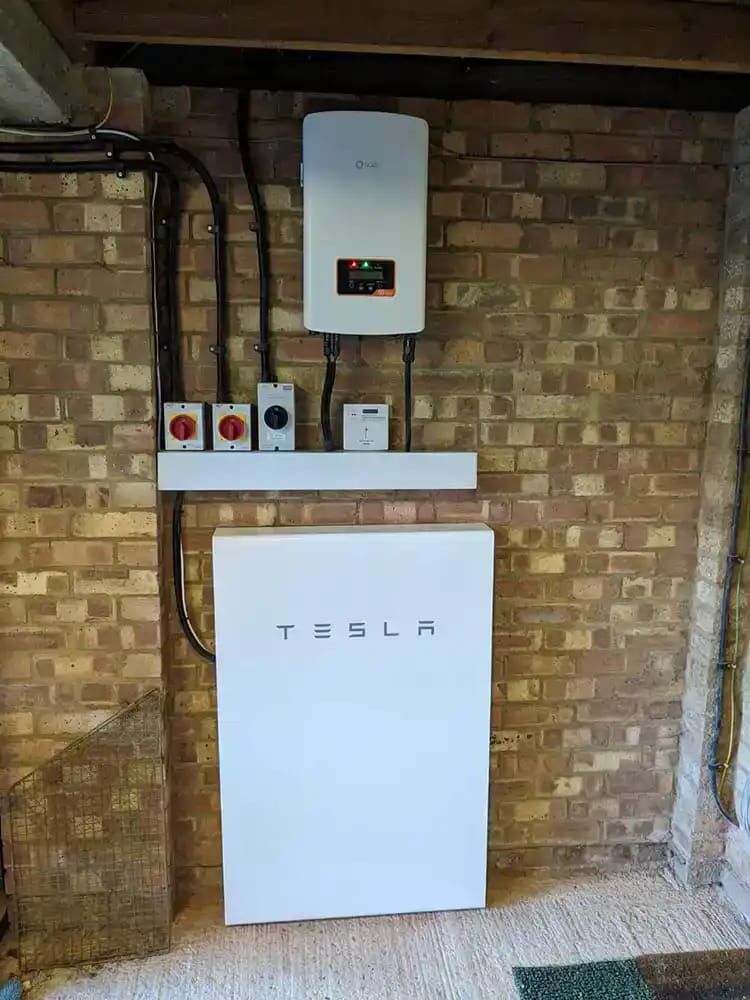
Home battery storage in Coventry: an honest guide for homeowners
Coventry is a city that builds batteries, so it makes sense that more of its households are now fitting them at home. With the UK Battery Industrialisation Centre on the doorstep and a strong engineering heritage, local homeowners tend to be well informed and rightly sceptical of the inflated savings claims that follow anyone who searches for a solar or battery quote. This page is written for Coventry homeowners who want a straight answer: what a home battery costs here, what it realistically saves, and when it is not worth it.
We are an independent quote and comparison service, not an installer. We match Coventry homeowners with vetted, MCS-registered installers and compare brands and prices so you get an honest number rather than a sales pitch. The rule we apply everywhere is the same: size the battery to what your home can actually cycle in a day, quote it against a realistic payback, and say so plainly if the sums do not add up for your house.
A home battery does one or more of three jobs. It stores your own daytime solar so you use it in the evening instead of buying it back at full price. It charges from cheap off-peak grid electricity, even with no solar at all, and runs the house through the expensive teatime peak. And, with the right kit, it keeps your essentials on during a power cut. Which of those matters most depends on your roof, your usage and your tariff, which is exactly why we quote against your real numbers.
What a home battery costs in Coventry in 2026
Prices in Coventry track the national picture. As a rule of thumb a fitted home battery works out at around £500 to £800 per usable kWh. A 5 kWh system is typically £3,500 to £5,500; a 10 kWh system, the most common size for a Coventry family home, is £5,000 to £8,500; and a 13.5 kWh Tesla Powerwall 3 runs around £8,000 to £11,500 installed. A full solar-and-battery system for a house with no panels yet is usually £10,000 to £16,000.
Two local points shape these figures. First, a lot of Coventry housing is solid-wall inter-war and post-war stock, from the Radford and Foleshill terraces to the semis of Earlsdon, Cheylesmore and Tile Hill, where a battery-only retrofit fits neatly in a garage or utility room without any roof work. Second, the 0% VAT on domestic battery storage, which covers standalone and retrofit batteries with no solar at all, runs only until 31 March 2027 before reverting to 5%. On a typical Coventry job that relief is worth roughly £800 to £2,000, so the window matters.
You can see worked figures on our cost page, and the funding and tax reliefs that apply are set out on our grants and funding page. We quote in usable kWh, not the bigger headline nominal figure, so you can compare Coventry installers like for like.
Your local grid: National Grid Electricity Distribution
Coventry sits in the National Grid Electricity Distribution (formerly Western Power Distribution) West Midlands licence area. That is the Distribution Network Operator your installer notifies when your battery goes in. For a system up to 3.68 kW per phase your installer files a G98 notification; above that they apply under G99. This is a routine formality handled by the installer, not something you deal with yourself, and it does not hold up most single-battery domestic jobs.
A domestic battery is permitted development, so no planning permission is needed for the great majority of Coventry homes. The exceptions worth flagging are the city’s conservation areas and its listed stock, including properties around Spon Street and the cathedral quarter, where the siting of any external unit needs a little more thought. A good installer raises this before quoting rather than after.
Typical Coventry bills and whether a battery pays back
A typical Coventry household uses somewhere between 2,700 and 4,500 kWh of electricity a year, with larger family homes in Finham, Green Lane and Allesley using more, and flats and smaller terraces in the CV1 core using less. That usage figure, taken straight off your bill, is what should drive the battery size, not a brand’s headline number.
The sizing logic is simple. Under about 2,800 kWh a year suits roughly a 5 kWh battery. A typical 3,000 to 4,500 kWh home lands on around 10 kWh, the sweet spot most Coventry households choose. High-usage homes, or those with an EV on the drive or a heat pump, move up to 13.5 kWh or more. The point is to buy a battery you can fill and empty once a day: a battery that never fully cycles is capital you never earn back, which is the single most common way local buyers get oversold.
On savings, be realistic. A well-sized 10 kWh battery cycling once a day on a good time-of-use tariff saves in the region of £550 to £620 a year. Added to existing solar, the saving comes from self-consuming power you would otherwise export cheaply, often £300 to £600 a year depending on your usage. Without solar, on a strong off-peak tariff, expect £250 to £550 a year. Those numbers give a payback of roughly 7 to 12 years on most Coventry homes, faster where a battery is added to solar you already own, slower for a battery-without-solar on a weak tariff. If your usage is low and you are on a flat single-rate tariff, we will tell you a battery is not worth it rather than sell you one.
Solar suitability and tariffs for Coventry homes
Coventry’s central England location gives roughly 1,000 to 1,050 kWh of generation per kWp of south-facing solar a year, typical for the Midlands and enough to make solar-and-battery worthwhile on a well-oriented roof. The city’s many post-war semis in Wyken, Walsgrave and Tile Hill often have simple, unshaded pitched roofs that suit an 8 to 14 panel array paired with a battery.
Tariffs are where a battery earns its keep, with or without solar. On a smart time-of-use tariff such as Octopus Go or Intelligent Octopus Go you charge the battery overnight at around 7p per kWh and run the house through the 4pm to 7pm peak instead of paying 28p or more. Octopus Agile can drop to 5 to 8p in its cheapest slots. The best tariffs open up a spread of about 15 to 17p per kWh between cheap and dear power in 2026, and that spread is what pays a battery back. You will need a smart meter to access these tariffs. If you have solar, you can also earn for exported power under the Smart Export Guarantee, with flat rates around 12 to 15p per kWh; a battery lets you keep more of that generation for yourself rather than spilling it cheaply at midday. Note that Octopus paused new Flux and Intelligent Flux sign-ups in April 2026, so check what is actually available before relying on a specific export tariff.
Choosing a brand, and why warranty security matters here
Brand choice is genuinely confusing, and Coventry buyers ask about it more than most given the local battery industry. There is no single right answer: it depends on budget, whether you want whole-home backup, and how much you value warranty security. Tesla Powerwall 3, at 13.5 kWh usable with 100% depth of discharge and a built-in backup gateway, is the premium pick and strong for backup. Fox ESS and Sunsynk offer good value per usable kWh for a solar-and-battery setup, and modular brands like Pylontech and Growatt let you add capacity later.
Warranty security is now a live issue, not a theoretical one. GivEnergy, a major UK residential battery manufacturer, entered administration in April 2026. Existing GivEnergy batteries keep working, but ongoing warranty support, firmware and spares are in serious doubt, so we would not recommend buying a new GivEnergy system and we factor manufacturer stability into every recommendation. Because we compare independent MCS-registered installers rather than pushing one brand, you get a steer based on what suits your home, not whichever battery an installer happens to stock.
A Coventry home battery in context, illustrative example
Here is a composite example, drawn from typical Coventry homes rather than a named customer, to show how the numbers work. Picture a 1930s three-bedroom semi in Earlsdon with a 4 kW solar array fitted several years ago. Like many older solar homes, it self-consumed only about half of what the panels generated, exporting the midday surplus for pennies and buying electricity back every evening at full price. Annual usage was around 4,000 kWh.
The household added a 10 kWh usable LFP battery, AC-coupled to the existing solar inverter, in a single day with no roof work. Solar self-consumption rose from roughly 50 percent to about 85 percent, and on dull winter days the battery topped up overnight on a cheap time-of-use tariff and ran the house through the 4pm to 7pm peak. The 0% VAT relief applied, and the estimated saving landed around £560 a year, giving a payback in the region of seven to eight years. The point of the example is not the exact figure, which depends on the specific home, but the method: size to what the house actually cycles, and quote against a realistic number.
Getting a home battery quote in Coventry
We cover the whole city, from the CV1 and CV2 core out through Earlsdon, Cheylesmore, Wyken, Tile Hill, Allesley and Finham, and across the CV3 to CV8 districts including Kenilworth and the villages toward Ryton. Many Coventry homeowners also ask us to quote homes elsewhere in the region, so we work across the wider West Midlands too, including nearby Birmingham and Leicester, as well as Solihull, Rugby, Nuneaton and Leamington Spa.
Whether you have a solar array in Earlsdon that exports too much of its generation, a battery-ready garage in Tile Hill, or simply a painful evening peak in a Foleshill terrace, the first step is the same. Read the worked figures on our cost page, check the reliefs on our grants and funding page, and when you are ready, tell us about your home and usage through the quote form. We will compare independent, MCS-registered Coventry installers and come back with honest, sized quotes, not a sales pitch.
Postcodes covered in Coventry
- CV1
- CV2
- CV3
- CV4
- CV5
- CV6
- CV7
- CV8
Other areas we cover
Get a free quote in Coventry
Responds within one working day
- 1. A quick call to understand your home, usage and what you want the battery to do.
- 2. Compared quotes from independent, MCS-registered installers — sized honestly, with a realistic payback.
- 3. Install and aftercare by MCS-certified engineers, 0% VAT applied.
- MCS Certified
- NICEIC
- RECC
- TrustMark