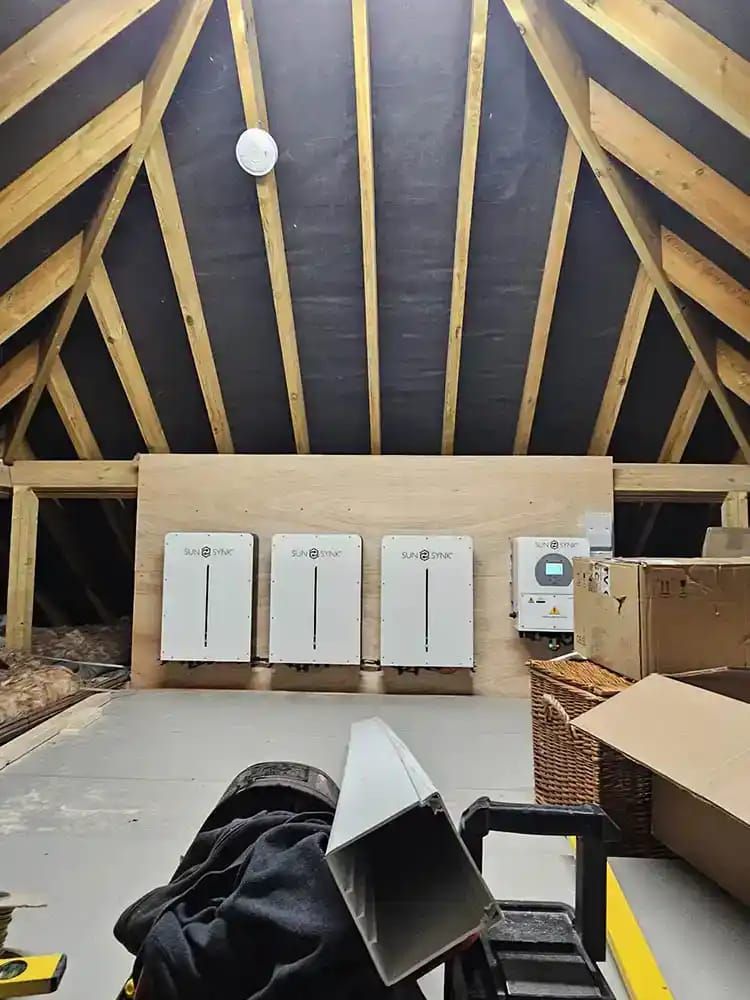
A 5 kWh home battery: the sensible starter for a smaller or lower-usage home
A 5 kWh battery is the entry point into home storage, and for the right household it is exactly the right size. It suits a smaller home, a flat, or any low-usage household getting through under roughly 2,800 kWh a year. It has the lowest upfront cost of any home battery, the quickest install, and it is the easiest to tuck into a cupboard, utility room or garage. If you are testing the water on storage, or your usage is genuinely modest, a 5 kWh system lets you start saving without over-committing.
The honest flip side is that a 5 kWh battery is easy to outgrow. If your annual usage is above about 3,500 kWh, a 5 kWh battery will fill and empty early in the evening, leaving you buying peak-price grid power for the rest of the night anyway. In that case you are better sizing up to a 10 kWh system, the sweet spot for a typical home. We will always size to what your home actually uses rather than sell you a battery that is too small to carry your evening or too big to fill.
Who it suits
A 5 kWh battery fits low-usage homes, one or two person households, smaller properties, and anyone pairing it with a modest 2 to 3 kWp solar array. It covers a typical evening's use with a single off-peak charge or a day's solar surplus. It also works well as a first step for someone who wants to keep the initial spend down, particularly with modular brands that let you add a second module later as your needs grow, for example if you get an EV or a heat pump.
How it works
A 5 kWh battery can be run in any of the main modes: storing solar from a small array, or charging from a cheap overnight tariff and discharging through the peak, or both. Its continuous power rating, typically around 2.6 to 3.6 kW, is enough for normal evening household loads but you should check it comfortably covers anything heavy you run at the same time. As with any battery, compare quotes on usable kWh, not the nominal headline, and remember modern LFP gives you 90 to 100 percent of nominal as usable capacity.
Realistic cost and payback
A 5 kWh home battery typically costs £3,500 to £5,500 installed including 0 percent VAT, at roughly £500 to £800 per usable kWh. Payback usually lands around 7 years for a well-matched low-usage home. Annual savings are naturally more modest than a larger battery, in the region of £300 to £450 a year depending on your tariff and whether you have solar, because you are cycling less energy each day. The key to a good payback at this size is that the battery fills and empties most days; a 5 kWh unit in a home that only ever part-uses it will stretch the payback out.
Getting the size right
The 5 kWh tier is right when your annual usage is under about 2,800 kWh and your evening peak is modest. If your bill shows 3,500 kWh or more a year, size up. If you have an EV or heat pump, or want whole-home backup, you are firmly in 13.5 kWh or larger territory. The quickest way to check is the savings calculator, which sizes from your annual usage, or a proper survey that looks at your real consumption pattern.
Key considerations
- Room to grow: choose a modular brand if you might expand later, so you can add capacity without replacing the whole system.
- Coupling: DC-coupled with a small new solar array (95 to 97 percent efficient) or AC-coupled as a retrofit (90 to 92 percent); for a battery without solar, coupling matters less.
- DNO and planning: a 5 kWh system is usually well under the 3.68 kW per phase threshold, so notified under G98, permitted development, no planning permission.
- Safety and warranty: LFP only, to BS 7671 and PAS 63100 by an MCS-registered, RECC-backed installer, warranted for around 6,000 to 10,000 cycles or 10 to 12 years to roughly 70 to 80 percent capacity.
- Manufacturer stability: even at entry level, buy a brand likely to honour its warranty. GivEnergy entered administration in April 2026, leaving warranty support, firmware and spares in doubt, so we would not recommend a new GivEnergy system. We compare independent installers and factor stability into the recommendation.
An illustrative example
As an illustrative composite, not a named customer: a retired couple in a 2-bed bungalow used about 2,600 kWh a year, mostly in the evening, and had a small 2.5 kWp solar array. They added a 5 kWh usable LFP battery, AC-coupled, for around £4,200 including 0 percent VAT. In the model the battery stored their daytime solar and topped up on a cheap overnight rate on dull days, covering most evenings and saving about £360 a year, a payback near 7 years. Because their usage was genuinely modest, the 5 kWh battery filled and emptied most days, which is exactly what makes it pay at this size. The figures are illustrative and depend on your usage, solar and tariff.
Not sure whether 5 kWh is enough for you? Run the savings calculator, read the cost guide, or get an honest quote that sizes to your real usage. The FAQs explain usable versus nominal capacity and sizing, and you can compare the popular 10 kWh sweet spot or a full solar-and-battery system.
Typical small system (5 kwh) - starter install
- Usable capacity
- 2.6-3.6 kW / ~5 kWh usable
- Installed cost (0% VAT)
- £3,500-£5,500 (0% VAT)
- Payback
- 7 years
- Annual CO₂ saved
- 0.3-0.6 tonnes
Get a free small system (5 kwh) - starter quote
Responds within one working day
- 1. A quick call to understand your home, usage and what you want the battery to do.
- 2. Compared quotes from independent, MCS-registered installers — sized honestly, with a realistic payback.
- 3. Install and aftercare by MCS-certified engineers, 0% VAT applied.
- MCS Certified
- NICEIC
- RECC
- TrustMark